Illustrative artwork of an aircraft ascending through dramatic clouds at dawn

Where Aviation Meets Curiosity

Stories, knowledge, and community for everyone who looks up when they hear an engine.

Explore Subsonic Pilot

Subsonic Pilot

AI-powered flight training tools built for student pilots and aviation enthusiasts.

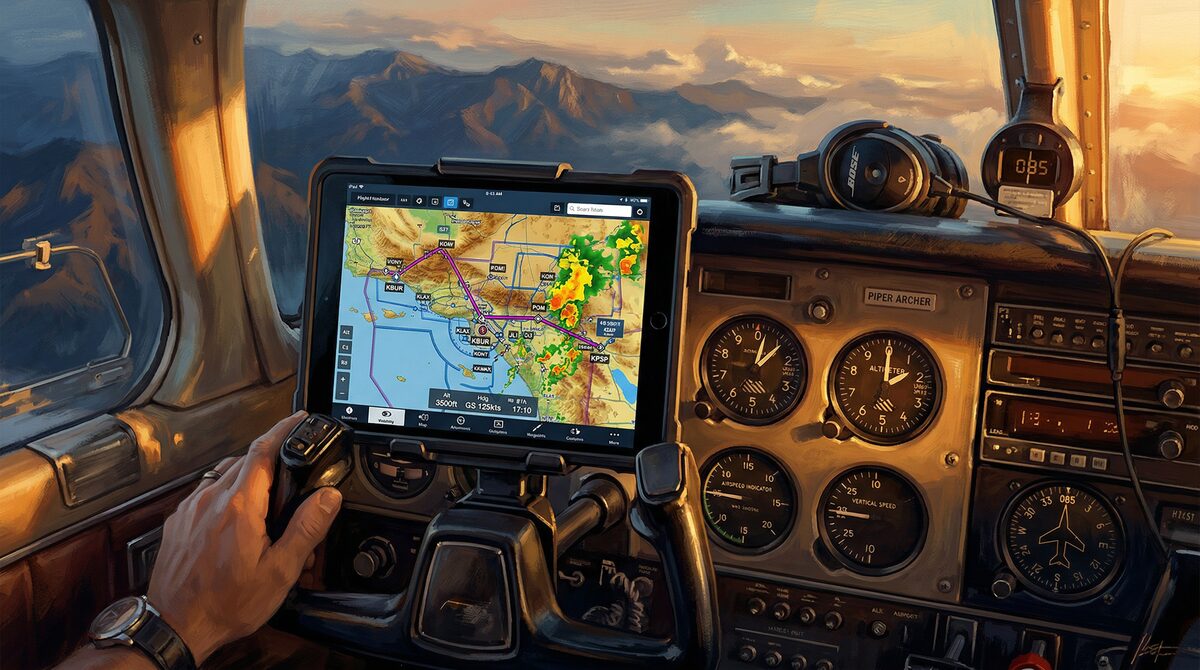
Cockpit view illustration looking out at horizon during golden hour

Your AI Flight Instructor

Study smarter, fly better. SubsonicPilot.com brings modern AI tools to flight training.

Flight Chat

Ask aviation questions and get detailed, regulation-backed answers instantly.

Flight Planner

Plan cross-country routes with weather briefings and fuel calculations.

Post-Flight Debrief

Review your flights with AI analysis to accelerate your learning curve.

AeroFlash

Flashcard system for FAA written exam prep. Study on any device, anywhere.

Visit SubsonicPilot.com
Illustration of a general aviation plane being inspected in a hangar

Built by Av Geeks, for Av Geeks

MachZero Aviation, LLC was founded on a simple idea: aviation should be accessible, fun, and endlessly fascinating. Whether you're a student pilot prepping for your checkride or someone who just loves watching planes, this is your corner of the sky.

We build tools, write stories, and create resources that make aviation knowledge approachable. From AI-powered training apps to deep dives into aeronautical history, MachZero is where curiosity meets the cockpit.

Learn by Doing

Hands-on tools and scenarios, not just textbook theory.

Open Knowledge

Aviation info shouldn't be gated. We share freely.

Safety First

Every resource is built with safety and accuracy in mind.

Community

A welcoming space for pilots and enthusiasts alike.

Get in Touch

Have a question, story idea, or just want to talk aviation? We'd love to hear from you.

Based in Colorado, USA
Somewhere between FL180 and the pattern
Back to Home

The Art of the Preflight Checklist

Cockpit view illustration during golden hour flight

Every flight begins long before the engine starts. The preflight checklist is the most critical 15 minutes of any flight, and yet it's the phase where complacency creeps in most easily. Experienced pilots know this. They treat the preflight with the same respect on flight number 5,000 as they did on flight number 5.

Why Checklists Exist

Aviation checklists didn't appear by accident. They were born from tragedy. In 1935, a Boeing Model 299 crashed during a demonstration flight because the crew forgot to release the elevator lock. The aircraft was too complex to rely on memory alone. The solution wasn't simpler planes. It was a simple piece of paper.

That philosophy hasn't changed. Modern aircraft have gotten exponentially more complex, but the checklist remains the single most effective safety tool in a pilot's arsenal. It's a forcing function against the natural human tendency to skip steps we've done a hundred times before.

The Walk-Around

Start outside the aircraft. You're looking for anything that shouldn't be there, and confirming everything that should. Check the control surfaces for freedom of movement. Inspect the fuel for water contamination. Look at the tires, the oil level, the propeller for nicks. Each item exists on the checklist because at some point, someone found it broken and it mattered.

One common mistake student pilots make is treating the walk-around like a visual scan. It's not. You should be touching things. Move the ailerons. Push on the pitot tube cover to make sure it's removed. Physically check the fuel drain. Your hands find things your eyes miss.

Inside the Cockpit

Once inside, the checklist shifts to systems verification. Avionics, instruments, fuel selector position, trim settings, circuit breakers. The key here is flow. Experienced pilots develop a physical flow pattern through the cockpit that mirrors the checklist. Left to right, top to bottom, or whatever pattern matches your aircraft.

But here's the critical distinction: the flow is a memory aid, not a replacement for the checklist. After completing your flow, you pick up the written checklist and verify. Flow and verify. That's the professional standard.

The Complacency Trap

The most dangerous point in a pilot's career isn't the first 50 hours. It's around 200 to 500 hours, when you know enough to feel confident but haven't yet experienced enough emergencies to respect what you don't know. This is when preflight corners get cut. "I just flew this plane two hours ago, it's fine." Famous last words in more than one NTSB report.

The antidote is discipline. Treat every preflight like it's a check ride. The examiner is always watching, and the examiner is physics.

Back to Home

Reading Clouds Like a Pilot

Cloud formations viewed from a pilot's perspective

Clouds are the atmosphere's storytelling medium. For pilots, they're not just scenery. They're weather briefings written across the sky. Learn to read them, and you'll understand turbulence, icing, and visibility long before your instruments confirm what the sky already told you.

The Basics: High, Middle, Low

Cloud classification starts with altitude. Cirrus clouds (the wispy, high-altitude ones) form above 20,000 feet and are made of ice crystals. They often signal an approaching warm front 12 to 24 hours out. Altostratus and altocumulus live in the middle layers, typically between 6,500 and 20,000 feet. Stratus and cumulus occupy the lower atmosphere.

For VFR pilots, the low clouds matter most. A solid stratus layer at 2,000 feet AGL means your planned cross-country just became an IFR flight, and if you're not rated, it became a no-go.

Cumulus: The Good and the Ugly

Fair-weather cumulus are a pilot's friend. They indicate thermal activity but generally benign conditions. Small, scattered puffballs with flat bottoms and rounded tops mean the atmosphere is doing its thing in a manageable way. You might get some light bumps flying through or near them, but nothing dramatic.

When those flat-bottomed cumulus start growing vertically, pay attention. Towering cumulus (TCU) are the precursor to cumulonimbus, the thunderstorm cloud. If you see vertical development reaching toward the upper atmosphere, you're watching a thunderstorm being born. Give it wide berth. The FAA recommends at least 20 nautical miles from any thunderstorm cell.

Lenticular Clouds: Mountain Wave Warning

If you fly anywhere near mountains, learn to recognize lenticular clouds. They look like smooth, lens-shaped formations that hover near ridgelines. They're beautiful. They're also a signpost for mountain wave turbulence that can exceed structural limits of light aircraft. Lenticulars mean strong winds aloft and rotors below. Respect them.

Fog: The Sneaky One

Fog is just a cloud at ground level, but it's responsible for more VFR-into-IMC accidents than any other weather phenomenon. Radiation fog forms on clear, calm nights and burns off after sunrise. Advection fog rolls in when warm, moist air moves over cooler ground. The key difference: radiation fog is predictable and temporary. Advection fog can persist for days.

Check your TAFs and METARs, but also look outside. If visibility is dropping and you can see moisture forming at the surface, it's time to land or divert. Now, not in 10 minutes.

Back to Home

VOR vs. GPS: When Old School Wins

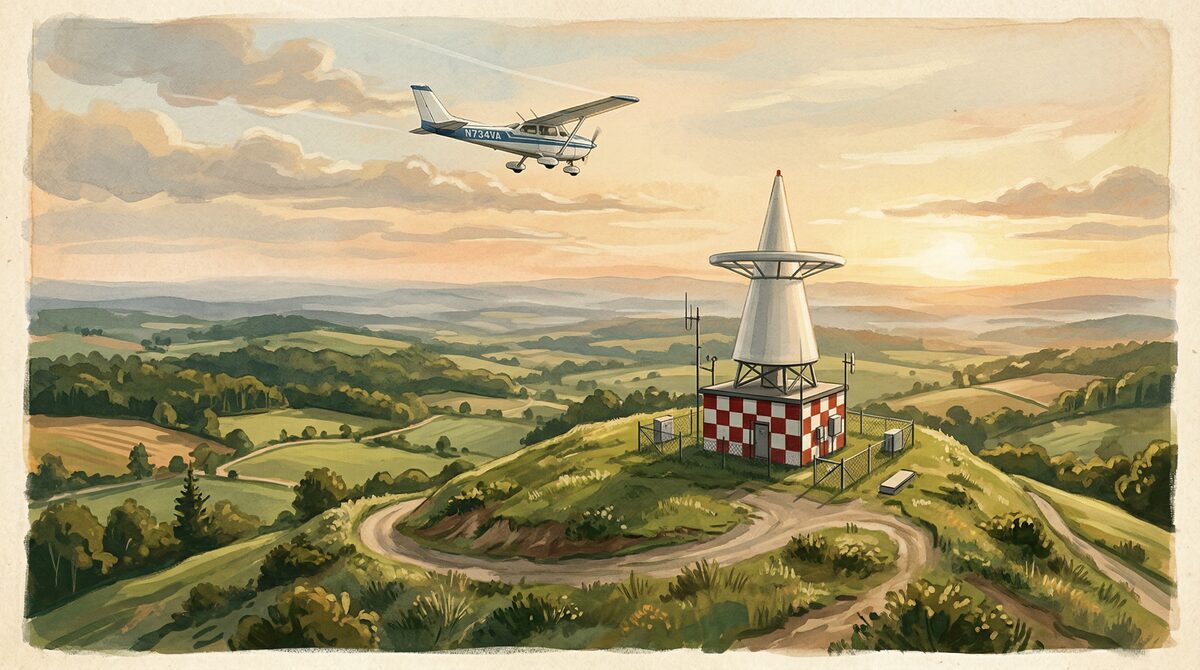
VOR navigation instrument in a cockpit

GPS has revolutionized aviation navigation. It's precise, reliable, and makes cross-country flying almost trivially easy. So why does the FAA still require VOR proficiency for instrument-rated pilots? Because "almost" and "trivially" don't belong in the same sentence as "single point of failure."

The Case for GPS

Let's give credit where it's due. GPS provides direct routing, which saves fuel and time. WAAS-enabled GPS approaches can get you down to near-ILS minimums at airports that never had precision approaches before. Moving maps have made situational awareness dramatically better. For day-to-day flying, GPS is superior to ground-based navigation in nearly every way.

The Case for VOR

VOR stations are ground-based and self-contained. They don't depend on satellite constellations, and they don't need software updates. When the GPS constellation has issues (and it does, more often than most pilots realize), VOR keeps working. When your panel-mount GPS fails mid-flight in IMC, your ability to track a VOR radial is the difference between a manageable situation and an emergency.

The FAA's minimum operational network (MON) ensures that enough VOR stations remain operational to allow any aircraft to navigate to an airport with a VOR approach from anywhere in the contiguous United States if GPS fails. That's not nostalgia. That's engineering prudence.

The Practical Answer

Use GPS as your primary navigation tool. But keep your VOR skills sharp. Practice tracking radials, identifying stations, and flying VOR approaches during your regular proficiency flying. The day you need those skills won't announce itself in advance.

Think of it like a backup instrument scan. You hope you never need it. You train for it anyway. Because the one time your G1000 goes dark at 3,000 feet in the clouds, you'll be very glad you can still fly the needles.

Back to Home

Barnstormers to Boeings: A Short History of GA

Vintage biplanes in formation through clouds

General aviation has one of the most colorful origin stories in transportation history. It didn't start with business plans and market research. It started with surplus military aircraft, open fields, and pilots who'd do anything to keep flying after the wars ended.

The Barnstorming Era (1920s)

After World War I, hundreds of surplus Curtiss JN-4 "Jennies" flooded the market. Former military pilots bought them for a few hundred dollars and took to the countryside, performing aerobatic shows and offering rides to anyone willing to pay a dollar. They called it barnstorming because they'd literally land in farmers' fields next to barns.

It was dangerous, unregulated, and wildly popular. Barnstormers introduced rural America to aviation. For many people, a five-minute ride in a Jenny was their first experience of flight. It planted the seed for what general aviation would become.

The Golden Age (1930s-1940s)

The 1930s saw the birth of purposefully designed personal aircraft. The Piper J-3 Cub, introduced in 1938, became the Model T of aviation. It was affordable, simple to fly, and tough as nails. The Civilian Pilot Training Program (CPTP) used Cubs and similar trainers to prepare thousands of pilots who would later serve in World War II.

After WWII, the pattern repeated with even more surplus aircraft and trained pilots. The GI Bill funded flight training for returning veterans. Airports sprouted across the country. General aviation boomed.

The Modern Era

The 1960s and 70s were GA's peak production years. Cessna, Piper, and Beechcraft were building thousands of aircraft annually. Then came the liability crisis of the 1980s, which nearly killed light aircraft manufacturing in America until the General Aviation Revitalization Act of 1994 provided some relief.

Today, GA is experiencing a renaissance of sorts. Glass cockpits, composite airframes, and turbine power have transformed what a small aircraft can do. Companies like Cirrus, Diamond, and Textron are pushing the boundaries. And with electric and autonomous aircraft on the horizon, the next chapter of GA history is being written right now.

Back to Home

ADS-B In: What Every Pilot Should Know

ADS-B receiver mounted on aircraft glareshield

Since January 2020, ADS-B Out has been required in most controlled airspace. But ADS-B In, the ability to receive traffic and weather data in the cockpit, remains optional. If you're not using it yet, you're missing out on one of the most significant safety upgrades available to GA pilots.

What ADS-B In Gives You

ADS-B In provides two categories of data: Traffic Information Service-Broadcast (TIS-B) and Flight Information Service-Broadcast (FIS-B). TIS-B shows you nearby aircraft on a display in your cockpit. FIS-B delivers weather radar, METARs, TAFs, PIREPs, NOTAMs, and TFRs directly to your panel or tablet.

That weather radar alone is worth the investment. NEXRAD data displayed on your moving map gives you a real-time picture of precipitation and storm cells along your route. It's not perfect (there's a latency of several minutes), but it's dramatically better than flying blind.

Receiver Options

You don't need a panel-mount installation to get ADS-B In. Portable receivers like the Sentry, Stratus, and SkyEcho connect to tablets running ForeFlight or Garmin Pilot. They sit on the glareshield, run on battery power, and deliver full TIS-B and FIS-B data. Most cost between $300 and $600. For the safety benefit, that's a bargain.

Important Limitations

ADS-B traffic data has a critical limitation: it only shows you aircraft that are transmitting ADS-B Out or that are being interrogated by radar and rebroadcast via TIS-B. Aircraft without transponders (or with them off) are invisible. This means ADS-B In supplements see-and-avoid. It does not replace it.

Similarly, NEXRAD weather data has a 5 to 15 minute latency. Convective weather can develop and move significantly in that window. Use ADS-B weather for strategic planning, not tactical penetration of storm cells. If a line of weather is on your display, it's already somewhere else by the time you see it.

Back to Home

First Solo: What Nobody Tells You

Student pilot in cockpit during first solo flight

Everyone talks about the first solo as this magical, defining moment. And it is. But there's a lot about it that nobody prepares you for. Here are honest notes from the other side of that milestone.

Your Instructor Just... Leaves

You've been training for weeks. You've done dozens of touch-and-goes with your CFI sitting right there. Then one day, mid-session, they say "pull over to the ramp" and get out. They just get out. They close the door, give you a thumbs up, and walk away. The right seat is empty. The airplane feels different. Lighter, both physically and metaphorically.

The first thing you notice is how quiet it is without your instructor talking. The second thing you notice is your heart rate.

The Radio Call Hits Different

"[Airport] traffic, Cessna [tail number], student pilot, left downwind runway two-seven, [airport]." You've made that call a hundred times. Saying it solo, knowing there's nobody to bail you out, adds a weight to each word. You speak more carefully. You listen more intently. This is what it means to be pilot in command.

The Landing Will Be Your Best or Your Worst

Without the instructor's weight, the airplane performs differently. It's lighter, so it floats more in the flare. Most first solo landings are either greased (because the adrenaline sharpens your focus) or rough (because the adrenaline overwhelms your fine motor skills). Either way, you'll remember it for the rest of your life.

The Taxi Back Is the Best Part

Nobody tells you this, but the best moment isn't the takeoff, the pattern, or the landing. It's the taxi back. The airplane is on the ground, you're alive, and you just did the thing. Your instructor is grinning on the ramp. Other pilots on the frequency heard "student pilot" and they know exactly what just happened. For a brief, perfect moment, everything in aviation makes sense.

Then you remember you need to do two more landings, and the nerves come right back. That's normal. That's flying.

Back to Home

KAPA Dispatch: What's Happening at Centennial Airport This Spring

Centennial Airport control tower at KAPA

If you've been flying in and out of Centennial Airport (KAPA) lately, you've already noticed a few things are different. The tower goes quiet at night, the fuel options have expanded, and the FBO crowd is buzzing about summer plans. Here's your ramp-side rundown of everything going on at one of the nation's busiest GA airports — and a few reasons to get excited about Colorado aviation this season.

Tower Rehab: Mind Your NOTAMs at Night

The most operationally relevant news at KAPA right now is the ongoing control tower rehabilitation. From March 2 through early April 2026, the Centennial Airport tower is closing nightly from 10:00 p.m. to 6:00 a.m., Monday through Thursday, while crews install a new elevator, HVAC system, break room, and restrooms. If you're planning a night departure or arrival during that window, KAPA reverts to a non-towered airport — that means self-announce on CTAF, keep your head on a swivel, and make sure you've pulled the current NOTAMs before you go. The good news: KAPA owns its tower outright, which is relatively rare among airports of its size, and the airport authority has been pushing the FAA for a new, purpose-built tower. More on that as it develops.

ATC staffing is also a watch item. The facility is currently running 15 full-time controllers against an ideal complement of 25, with six more in training. That shortage has contributed to a dip in total operations — 2025 came in around 306,000 ops versus roughly 340,000 in 2024. The FAA's broader controller hiring push can't come fast enough for busy airports like this one.

Unleaded Avgas: The Quiet Revolution Continues

Colorado made national GA history when KAPA became the first public-use airport in the state to offer UL94 unleaded avgas through jetCenter of Colorado. The program has been running long enough to rack up 380,000 gallons sold since launch — a meaningful number for a product that was brand-new on the market just a couple of years ago. The March 2026 airport report notes that 80 percent of KAPA-based flight school aircraft are already certified to run UL94, which tracks: the airport's training traffic is enormous, and getting student aircraft off 100LL faster is a win for everyone, including the neighborhoods under the pattern. Rocky Mountain Metropolitan Airport (KBJC) is also getting ready to add unleaded avgas soon, so this option will be spreading across the Front Range.

One wrinkle: KAPA saw unleaded fuel sales dip slightly in early 2026 due to some fuel truck maintenance issues and isolated aircraft performance concerns. Nothing systemic — just the typical growing pains of a new fuel type working through the fleet. If you're flying a piston and haven't checked whether your aircraft is UL94-approved, now is a good time to look it up. The FAA's EAGLE program has a running list.

Mark Your Calendar: Runway 5K on June 6

Every year, Centennial Airport does something that only an airport could pull off: it closes a runway, fills it with people, and holds a 5K race. The 2026 Runway 5K is back on June 6 with the theme "Hotdogs and Airplanes" — which honestly sounds like the perfect Saturday. Registration is open now, and the event typically draws around 2,000 participants. Proceeds fund aviation scholarships and youth programs, so it's a good cause with a hard-to-beat backdrop. If you've never jogged past a row of parked twins with jet exhaust lingering in the morning air, put it on your bucket list.

Colorado Fly-Ins and Airshows: The 2026 Season Is Stacked

The Colorado Pilots Association unveiled their 2026 fly-in calendar at the January planning meeting at KBJC, and it's a solid lineup. For pilots who want to stay closer to home, the April 25 trip to Akron, CO (KAKO) is a standout: you'll tour Redline Propeller's shop, get an up-close look at how constant-speed props are rebuilt, and they're feeding everyone lunch. The October 2-4 trip to Nucla, CO (KAIB) is the classic Colorado mountain-airport adventure — mesa-top runway, 360-degree views, and a group dinner on a patio in canyon country. That one tends to fill up, so get on the host's list early.

On the airshow front, Colorado Springs is bringing back the Pikes Peak Regional Airshow at KCOS on September 19-20, 2026, with the U.S. Navy Blue Angels headlining. That's about an hour south of KAPA on the Front Range — a very flyable day trip if you want the ultimate airshow experience. And out west, the Grand Junction Air Show returns October 3-4 at KGJT.

The Noise Picture: What the Numbers Say

If you've been following the KAPA noise story, the airport released its latest community report for early 2026. February logged 515 complaints from 42 households — the bulk of them during daytime hours, and heavily concentrated around Elbert and Douglas Counties southeast of the field where training flights track toward the practice boxes. The airport is rolling out a new "Fly Quiet" dashboard starting this spring, with Q4 2025 and Q1 2026 data going to flight schools in April and a public release in May. The goal is accountability and transparency rather than restriction, and the data-driven approach is the right one. If you fly training ops out of KAPA, worth staying plugged into how those conversations are evolving — the March 2026 CACNR report has the full picture.

The bottom line: KAPA is navigating the same tension every busy GA airport faces — enormous community value versus real noise impacts on the neighborhoods below. The airport seems genuinely committed to working through it collaboratively. That's worth something.

Quick Hits for Front Range Pilots

A few more items worth having on your radar: The FAA's Part 150 Noise Compatibility Study for KAPA is working through the public comment process, with meetings expected in April. If you have thoughts on how the airport manages noise and flight paths, this is your formal opportunity to weigh in. Also, the Colorado Pilots Association has updated its practice area overlay for ForeFlight — if you're doing training flights in the Denver metro airspace, download the latest version (COPA_v6, updated April 2025) to make sure you're using the designated boxes and staying off the noise-sensitive routes. Flying the right boxes isn't just courtesy — it's the kind of thing that keeps GA airports from getting restricted.

Spring is the best time to fly in Colorado. The snowpack is still holding in the mountains, mountain wave is real but manageable, and the Front Range afternoons haven't yet turned into the afternoon thunderstorm gauntlet of July. Get out there while the getting's good — and if you're at KAPA, maybe grab a cup of coffee at the FBO and wave to the tower crew. They're running lean, and they're doing a solid job.